This week I helped a woman-owned self-care brand launch an online store. Not build it — we'd done that over the past several weeks — but actually take it live, where a real stranger can find a product, pay, and expect it to show up. That last step is where most first-time founders freeze, because the store already looks finished. Looking finished and being ready to sell are two very different things.
Why a finished-looking store still can't take a single order
A homepage, product photos, and nice branding are the part everyone sees. They're also the part that doesn't move money. The store I just launched looked done for days before it could accept its first order. What was missing wasn't design — it was the plumbing underneath: a way to charge a card, a shipping price, a tax setup, and the legal pages a real business needs.
Here's the mindset shift I try to give every founder: the exciting part is done early, and the unglamorous part is what actually opens the doors. If you dread the boring checklist, you'll stall right at the finish line.
What actually stands between you and launching an online store?
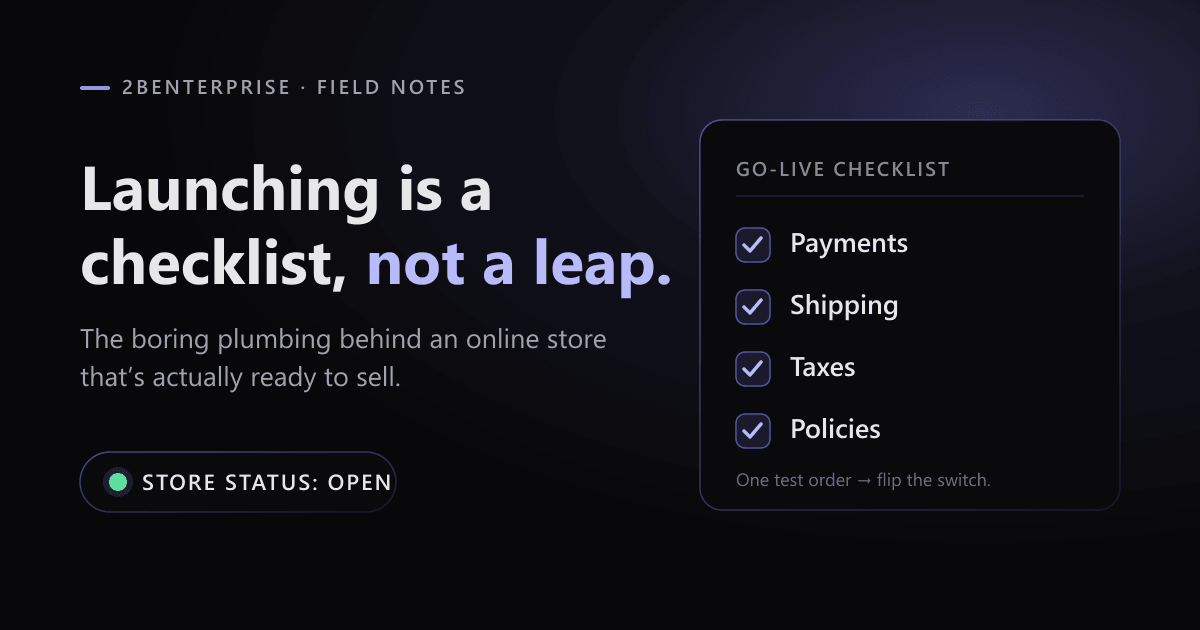
For this launch, it came down to four things. None of them are hard on their own. Skipping any one of them is what keeps a store stuck in "almost."
Payments
You need to be approved to accept cards and to actually receive the money. This is often the last thing to clear because a payment provider has to verify your business, so start it early. For this brand, payments getting approved and active was the final external dependency we were waiting on — everything else was ready before it.
Shipping
Decide what a customer pays to get their order. We kept it simple: one flat $5.95 standard rate, a $15 express option for people in a hurry, and local pickup ready in about 24 hours. You don't need a clever formula on day one. You need one clear, honest price a shopper can understand at checkout.
Taxes
Boring, non-negotiable, and easier than it sounds once you've registered in your home state. The founder had already registered, so we just confirmed the store was set to collect tax correctly where it's required. Don't guess here — get registered, then let the store handle the math.
Policies
Every real store needs a privacy policy, a refund policy, a shipping policy, and terms. We drafted all four in plain language, reviewed them, and published them. They protect you, and they quietly tell a first-time buyer that you're a real business, not a pop-up.
The quiet launch trick: test it before you tell anyone
The single best move on launch day is unglamorous: place a real test order yourself before you announce anything. Keep the store hidden behind a password, buy something, and watch the whole path — checkout, payment, the confirmation, the owner notification. Only after that works do you remove the password and let the world in.
This is the cheapest insurance there is. A five-minute test order catches the broken thing that a hundred real customers would have caught for you — loudly, publicly, and with their wallets.
What we chose to hold back on purpose
You don't have to launch everything at once. We took four products live and deliberately held two back as drafts because they were still waiting on photos. One product that was out of stock we kept visible, clearly marked "sold out — restocking soon," with inventory tracking on so it can't be over-sold.
That's a feature, not a compromise. Launching a focused, honest storefront beats stalling for weeks over the last two items. You can always add more the day the photos are ready.
The takeaway: launching an online store isn't a leap — it's a checklist, and the boring items are the ones that actually open the doors. Get the plumbing right, run one test order, and flip the switch with confidence instead of crossed fingers.